What casting directors actually look at
I asked casting directors in Boston and New York what they actually look for in an actor headshot. The answers are not what most actors think.
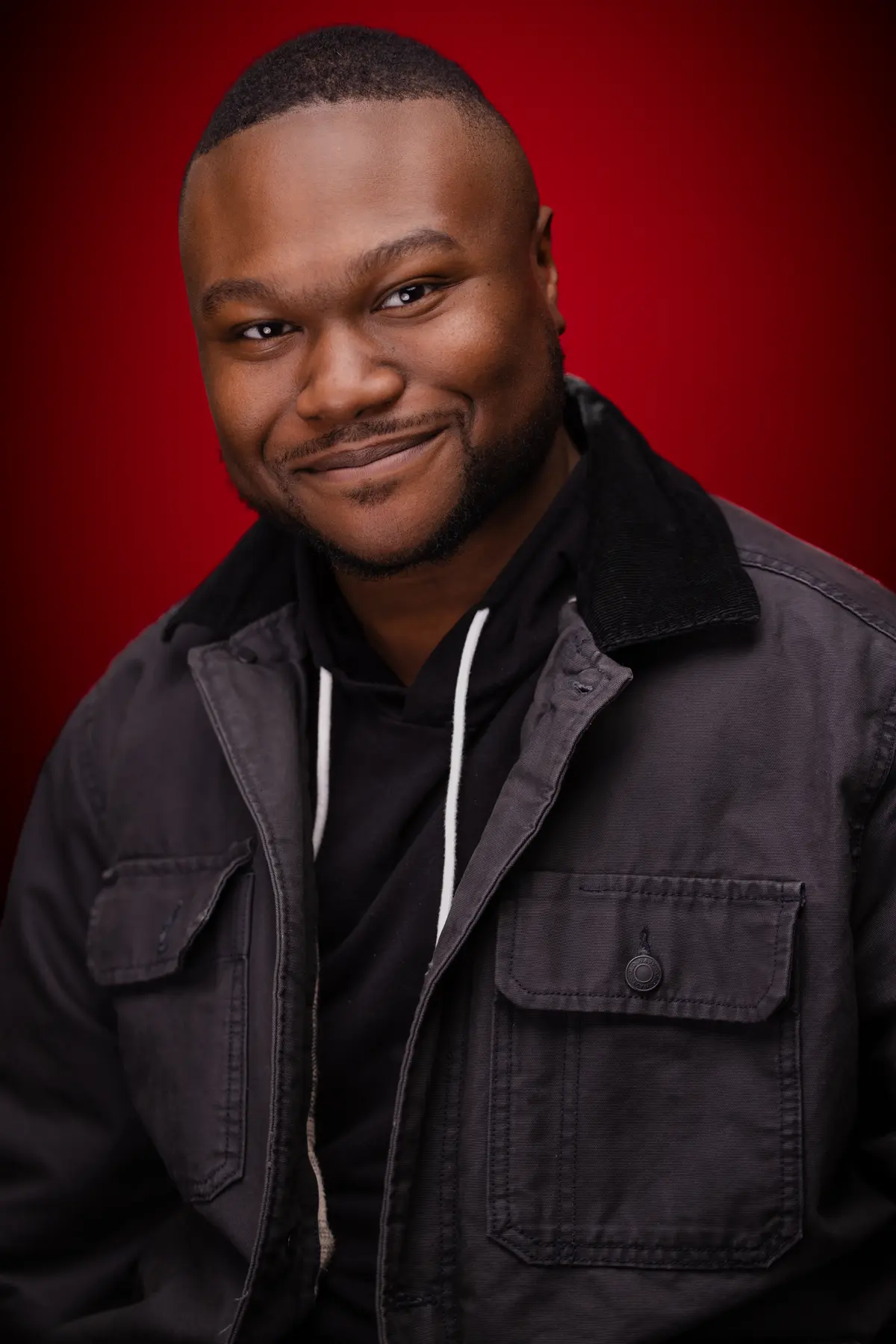
Most actors prepare for headshots by looking at other headshots. They scroll through agency sites, save Pinterest boards of poses, study what booked the last role. That’s a reasonable instinct — and it’s also why most actor headshots look the same.
Here’s the thing: a casting director doesn’t look at your headshot the way you look at your headshot. They look at thousands a day. They’re not admiring it. They’re scanning it for one specific signal: can you book the role I’m casting right now?
I asked a handful of working casting directors and casting associates in Boston and New York what they actually pay attention to. Some of what they said surprised me. Most of it should change how you prep.
They look at the eyes first. And only the eyes.
Every single one said the same thing without prompting: the eyes are the first thing they see, and often the only thing that matters.
Not the smile. Not the wardrobe. Not the lighting. The eyes.
“If I can’t read what’s behind the eyes, I’m done,” one Boston-based CD told me. “I’m not going to spend more than a second on a headshot where someone’s faking it.”
What “reading the eyes” means: there has to be a thought behind them. A moment. A point of view. The actor needs to look like they were thinking about something when the shutter clicked, not like they were waiting for the photographer to count to three.
This is the thing most actors get wrong. They show up trying to look pretty, or trying to look serious, or trying to look like the headshot they think will book. None of that lands. What lands is interiority — the camera catching you mid-thought, on the way somewhere.
The practical takeaway: don’t worry about your jaw, your hair, or your “good side.” Worry about what you’re actually thinking when the camera fires. We’ll talk about that on set.
They look for type, not range.
Most actors send a stack of headshots showing all the things they can play. The CD I talked to most about this got annoyed when I asked about range.
“I’m not casting you. I’m casting this role. I have 90 minutes to find someone who looks like the person I already have in my head. If you don’t look like that, I move on.”
The implication: your headshots should not show that you can play everything. They should show, clearly and quickly, the 3–5 buckets you actually live in. A doctor. A teacher. A barista. A wry skeptic. A best friend. Whatever your actual sweet spot is.
If your shots are all over the place — one in a leather jacket, one in a suit, one looking sad, one looking quirky — you’re harder to slot, not easier. CDs don’t think “look at this versatile actor.” They think “I don’t know what to do with this.”
Pick a lane. Two or three lanes. Stay in them. Pictures that look related to each other are better than pictures that show variety for variety’s sake.
(More on this in my wardrobe guide — wardrobe is how you signal type without saying it out loud.)
They look at age, hard. Be accurate.
Every CD I asked mentioned this, somewhat reluctantly: actors send headshots that don’t match how they currently look.
“If I bring someone in based on the headshot and they walk in looking 10 years older, I’m not casting them. I’m also annoyed.”
Heads up: a headshot more than 2 years old is probably wrong. If you’ve changed your hair, lost or gained meaningful weight, started or stopped wearing glasses, gotten a tattoo somewhere visible — update the photos.
Not because the old you isn’t fine. Because the gap between the headshot and the person who walks in the room is the fastest way to lose trust with a casting office.
If you’re 35, don’t try to look 25. If you’re 28, don’t try to look 35. Casting wants to know who’s walking through the door. Be that person, on your best day. Not someone else.
They look at clothing — but not how you’d think.
Wardrobe matters, but not in the “what’s trendy” sense. It matters because clothing tells them what role you book.
The CDs I asked said the same thing about wardrobe almost word-for-word: it should disappear. It shouldn’t be the first thing they notice. The actor should be the first thing they notice.
Practical implications:
- No logos. None. Ever. Even small ones pull the eye.
- Solid colors over patterns. Heathered fabrics are fine. Florals, stripes, plaid — almost never.
- Necklines that work for your face. This sounds obvious. Most actors get it wrong because they wear what they think is flattering instead of what reads on camera.
- Color that matches the work. Earth tones for grounded characters. Jewel tones for romantic leads. Black for edgy/film. Neutrals for almost anything.
- Avoid: bright white (blows out under flash, pulls focus from face) and all-black tops on dark backgrounds (head floating on a void).
Again — if I have to ask “what’s that shirt,” the shirt is wrong.
They look at retouching. They notice when it’s too much.
This was the one that surprised me most. I assumed CDs wanted polished, perfect skin. They don’t.
“I want to see what they actually look like. If the skin is glassy and the eyes have been brightened, I assume the rest of the headshot is also lying to me.”
Light retouching — fly-aways, stray hairs, the occasional blemish, color, contrast — is fine. Expected. What’s not fine is the Instagram filter version: smoothed skin, whitened teeth, eyes pumped to twice their natural brightness, jawline subtly contoured.
If your headshot looks like a magazine cover, casting will assume you don’t actually look like that. They’ll resent the deception. And they’ll be right.
I tell every client the same thing: my job is to make you look like you on your best day, not like a different person who happens to share your name.
They look at the photo’s energy more than its technique.
Lighting. Focus. Composition. These all matter. But none of them matter as much as one quality the CDs kept coming back to: does the actor look alive?
“I can tell within a second if someone was actually present at their shoot. I can also tell when they weren’t. The second one is most of the headshots I see.”
Aliveness is hard to fake. It comes from the actor being engaged with the moment — usually because the photographer is engaging with them, not just operating the camera. The actors who look alive in their headshots tend to be the ones who worked with someone who directed them, talked to them, gave them something to play. The ones who look frozen tend to have been left to “do their thing” while the photographer adjusted lighting.
(This is the entire reason my sessions are structured the way they are. I’d rather have 10 minutes of real engagement than an hour of polished posing.)
What they don’t look at.
A few things CDs mentioned that they don’t actually care about, which actors obsess over:
- Whether it’s color or black-and-white. “I don’t care. Pick one. Be consistent.”
- Studio vs. natural light. “I don’t care. As long as the light is on your face.”
- Whether it’s printed on matte or glossy. This is mostly a digital game now anyway.
- Whether you’re smiling or not. “Both is fine. The smile being fake is what kills it.”
- Whether the background is white, gray, or environmental. “As long as it’s not distracting.”
In other words: a lot of what actors worry about is invisible to the people they’re trying to impress.
What this means for your next shoot
If I had to compress everything above into one sentence: shoot for the role you actually book, not the role you wish you booked. With your real eyes, in your real face, doing something real on camera.
That’s harder than it sounds. It takes a session that’s relaxed enough for you to drop the performance, and structured enough that you walk out with a real range of usable images. It takes a photographer who’s looking at you, not at their settings.
That’s what I try to do every time.
Ready to update your headshots? Book a session — actor headshot sessions start at $545, and standard sessions include a pre-shoot call where we plan out exactly which types and looks we’re going for.
Questions about your specific situation? Email me. I read everything.
More reading: How to prep for an actor headshot session · A wardrobe guide for actor headshots