A wardrobe guide for actor headshots
Colors, necklines, what to skip, and how to build a small wardrobe that gives you real range. From a Boston headshot photographer.
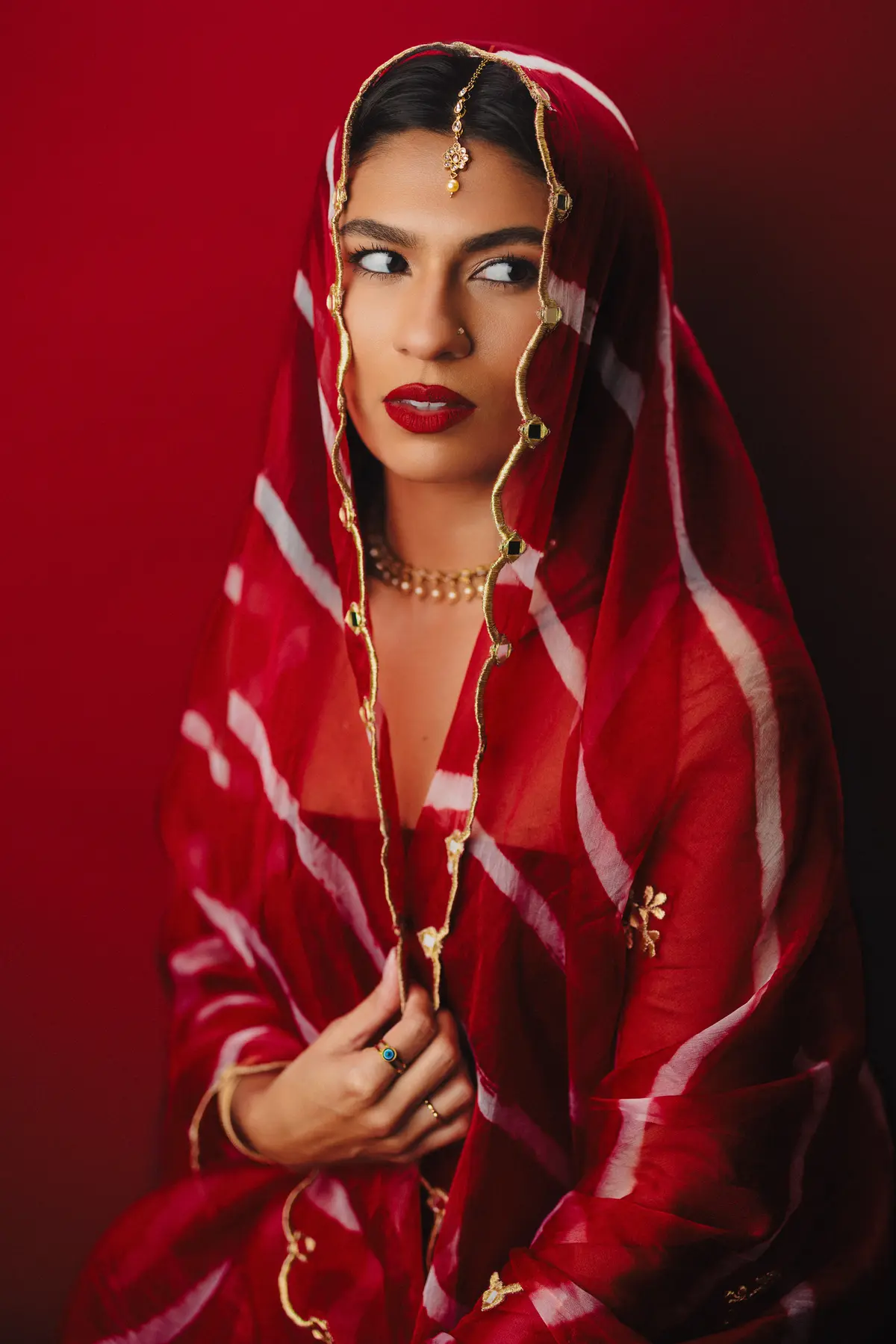
If I could give actors one piece of pre-shoot advice that they actually followed, it would be this: stop overthinking the wardrobe, and start being precise about it instead.
Most actors arrive with one of two problems. Either they brought twelve options “just in case” and now we’re spending half the session changing clothes, or they brought two things they “always wear” and we have no range. Both are wardrobe problems, but the underlying issue is the same: they didn’t make decisions before they got here.
Here’s how to make those decisions. This is the same guide I send to every client a few days before their shoot.
The big idea: clothing should disappear
The number-one rule of headshot wardrobe is that you should not notice the clothing.
That sounds backwards. Isn’t the point to look good?
The point is to look like you. Casting directors are scanning for a person who can play a role. If their eye lands on your shirt before it lands on your face, the shirt has won and you’ve lost.
So: nothing loud. Nothing trendy. Nothing your friends would compliment you on. Wardrobe that earns no compliments is wardrobe that’s doing its job.
What to bring: 5 to 7 options, three categories
The math: 5–7 items, organized into the categories below. That’s enough to give us real range, not so much that we burn the session changing clothes.
Category 1: Casual / approachable (2–3 options) Think henleys, simple crewneck tees, soft button-downs left open over a tee, light sweaters. Earth tones, soft blues, warm grays. This is your “everyman / everywoman” lane — neighbor, teacher, best friend, barista. Most actors book more of this than they expect.
Category 2: Polished / professional (2 options) Button-down shirts (well-fitted, not boxy), simple knit tops, blazers. Solid colors, no patterns. This is your lawyer / doctor / executive / professional-parent lane. Even if you don’t think you read this way, bring one — it will surprise you.
Category 3: Character / edge (1–2 options) This is where you put your fingerprints on the shoot. A leather jacket, a vintage piece, a piece of jewelry you actually wear, a graphic-free t-shirt in a strong color. Whatever signals who you are when no one’s casting. This is the lane that books the roles you most want to book.
If you only read for theater and never for film/TV, you can skip Category 2 entirely and double up on 1 and 3. If you read primarily for commercials and corporate, weight toward 1 and 2.
Colors that work, colors that don’t
Almost always good:
- Forest green, olive, sage
- Burgundy, rust, warm brown
- Slate blue, navy
- Charcoal, warm gray, taupe
- Cream, soft camel
- Black (with care — see below)
Usually risky:
- Bright white (blows out under any flash, draws the eye away from your face)
- Bright primary colors (red, royal blue, sunshine yellow — they read as costume)
- Anything neon or fluorescent
Match the color to the work. Warm earth tones for grounded characters. Jewel tones for romantic / dramatic leads. Muted, desaturated tones for indie film and prestige TV. Crisp neutrals for corporate and commercial.
About black: black tops can work great, especially on lighter backgrounds. They become a problem when (a) the background is also dark, so your head floats in a void, or (b) you’re trying to look “edgy” by wearing all black, which usually just reads as trying too hard.
Necklines: the most-overlooked decision
Necklines matter more than most actors realize. They frame your face. They affect where the eye lands. They can flatten or elongate your features.
Crew necks are safest for almost everyone. They sit close, they don’t compete with the face, they work in casual and polished both.
V-necks open up the chest and elongate the neck. Great if your face is round or short-necked. Risky if the V goes too deep — it pulls the eye down.
Henley (a buttoned crew) reads casual-but-considered. One of the best off-the-shelf headshot options for men.
Button-downs worn open over a tee read approachable. Worn buttoned read polished. Bring it both ways.
Turtlenecks and high collars can look great on the right face but tend to make the head look “perched.” Try before you pack.
Spaghetti straps, low scoops, or anything that disappears past the collarbone can read as either glamorous or like you forgot your shirt. Bring only if you’re sure of the effect you want.
Fit matters more than label
The single fastest way to make a headshot look bad is to wear something that doesn’t fit you today.
This includes:
- Anything that strains across the chest, shoulders, or buttons
- Anything that’s too loose and pools around the neck or collar
- Anything you haven’t put on in over a year (try before you pack)
- Anything that wrinkles by the time you walk to your car
Fit > brand. A $20 well-fitting tee beats a $200 shirt that’s a little too big every single time.
If you have one item that fits you perfectly, bring it. Bring it twice — in two colors if you have it.
Layers: how to get four looks from three pieces
Layering is the cheat code. A t-shirt + a button-down open over it + a jacket gives you:
- T-shirt alone (most casual)
- T-shirt with the button-down open over it (casual-but-considered)
- T-shirt with the button-down buttoned (polished-casual)
- Add the jacket (polished, character)
That’s four distinct looks from three items. Compare to bringing four separate full outfits, which gives you four looks and a lot of changing.
I plan most sessions around layering. Pack with it in mind.
What to skip
- Logos and visible brand names. Even small ones. They pull the eye and they date the photo.
- Loud patterns. Florals, stripes, plaid, checkered. The pattern wins every time.
- Statement jewelry. Unless the character you book is “person who wears statement jewelry.” Most often it competes.
- New clothes you’ve never worn. They look new in the photo. New is the opposite of lived-in.
- Costumes. Don’t dress as a doctor. Don’t wear a chef’s coat. If you’d never wear it on the street, don’t wear it for the headshot. Casting can imagine.
- The shirt you wore in your last headshots. You want the new images to look new. Same shirt = looks like a re-shoot of the same session.
Practical day-of logistics
Bring everything on hangers if you can. Wrinkled doesn’t read.
Bring a lint roller.
Pack a backup of your bottom layer (a tee, a tank). If we sweat through one, we’re not stopping the shoot.
If you wear makeup day-to-day, bring touchup. If you don’t, don’t suddenly start.
Don’t bring anything that requires explaining. If you have to say “but it looks better in person,” it’s not the right piece.
The pre-shoot wardrobe call
I do this with every client a few days before the shoot. We jump on a quick call, you send me phone photos of your top 8–10 options, and I tell you which 5–7 to actually bring and in what order to shoot them.
This isn’t a luxury — it’s a session-saver. It means we don’t waste time on set deciding, and you don’t waste time at home packing things you won’t use.
This call is included in every actor headshot package. Don’t skip it.
Ready to book? Take a look at the booking page — actor headshot sessions start at $545, and standard sessions include the wardrobe call described above.
Other prep reading: How to prep for an actor headshot session · What casting directors actually look at